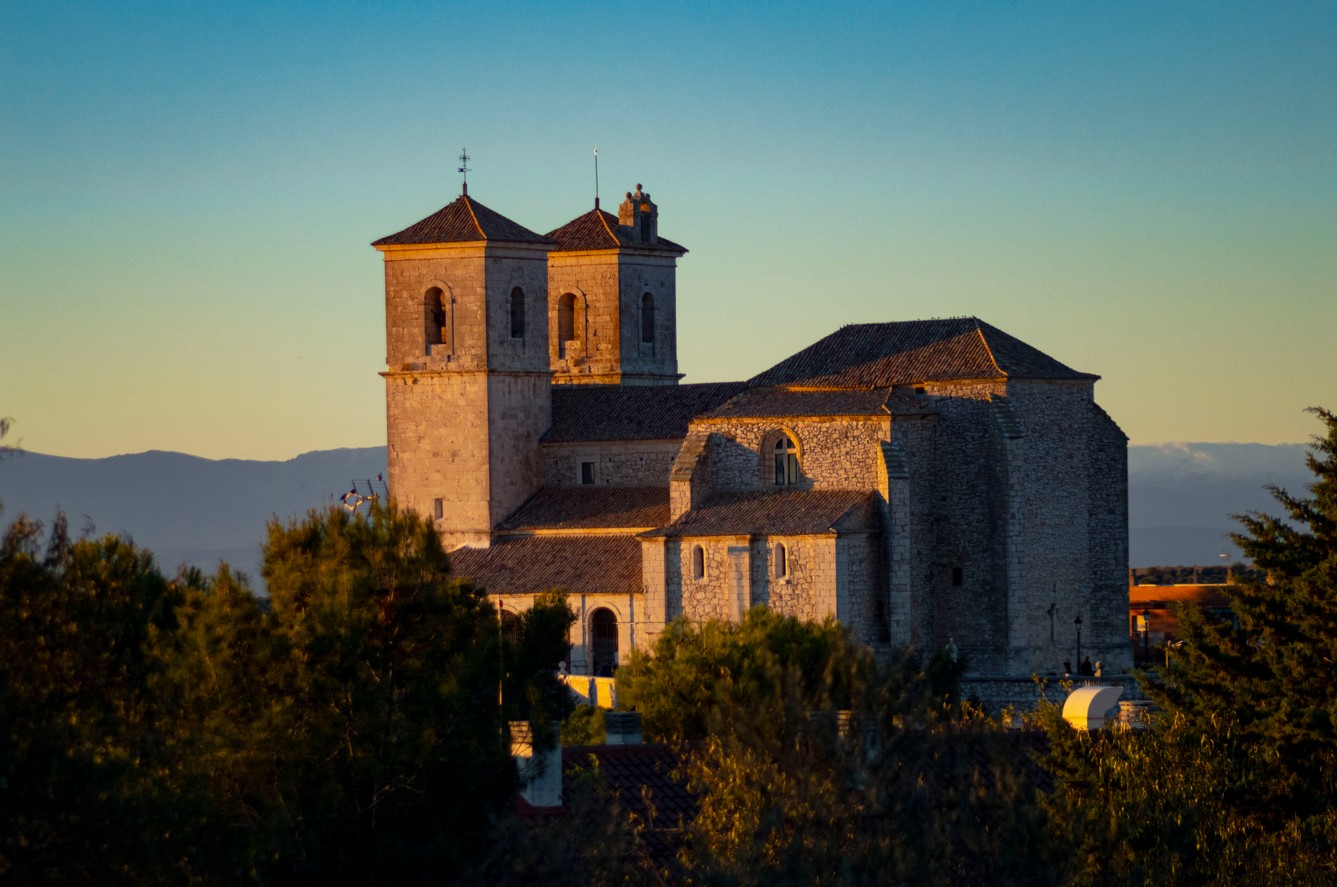
Declared a Historic and Artistic Landmark in 1981, the Parish Church of St. Mary of the Castle continues to thrive thanks to the efforts of the locals from the town of Campo Real. The current most popular hypothesis is that it is one of the few legacies of the Templars having passed through the Madrid Region. The original building of this church likely dates back to the 12th century. Some say it was a Knights Templar convent, and although there are hardly any written documents to confirm this, remains of the cistern of this primitive fortress and a set of tunnels have been found under the Plaza del Palacio towards the church. The First Book of Baptisms confirms that the church was founded in the 14th century, when it was consecrated by Archbishop Jimeno de Luna, together with 13 bishops. You can still see some red crosses etched on the pillars of the temple, commemorating this historical event on 10 February 1333, the day of St. Scholastica. After the Order of the Templars was dissolved and the Holy Places were lost, its properties passed to the Order of St. John of Jerusalem, later known as the Order of Malta. This is how that ancient castle of Templar origin would have passed to the Hospitaller Order, and would later become a church of the Archdiocese of Toledo. Some of the most interesting original structures remaining are the semicircular windows and the star shaped cross vaults in the sacristy. The first extension of the church took place in the 16th century. The only structures remaining from that period are the chancel, which is very tall and late Gothic in style (as can be seen in the vaults and the pointed arch window), and some Renaissance structures (the foundations, pillars, the capitals of the chancel, the baptismal font and the entrance to the sacristy).