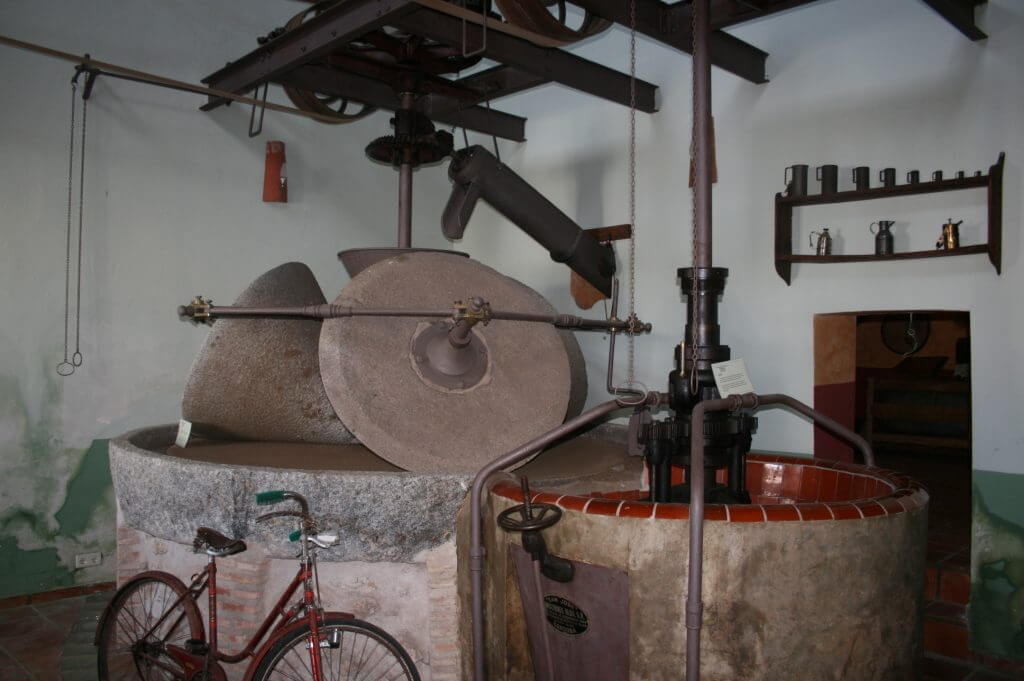
Although we don’t know exactly when the mill opened, there is evidence that it was running in the 19th century.
The oil mill was a meeting point for people in the town during the first few months of the year when, after a long day of olive harvesting, the raw produce was taken there to be sold or exchanged for finished products.
For many inhabitants of the town, oil was the only asset they owned, and in a certain way, their lives revolved around it and the cultivation of olives. The heart of the building is still the mill room where you can see the millstones, beater, press, boiler, engines and oil decanting vats. This means you can follow the entire oil production process, from the moment the olives enter the mill until the oil is ready for consumption.
A large number of objects from their ancestors are permanently exhibited there: animal-drawn carts, winnowing machines, threshing machines, farming and agricultural tools, and more.