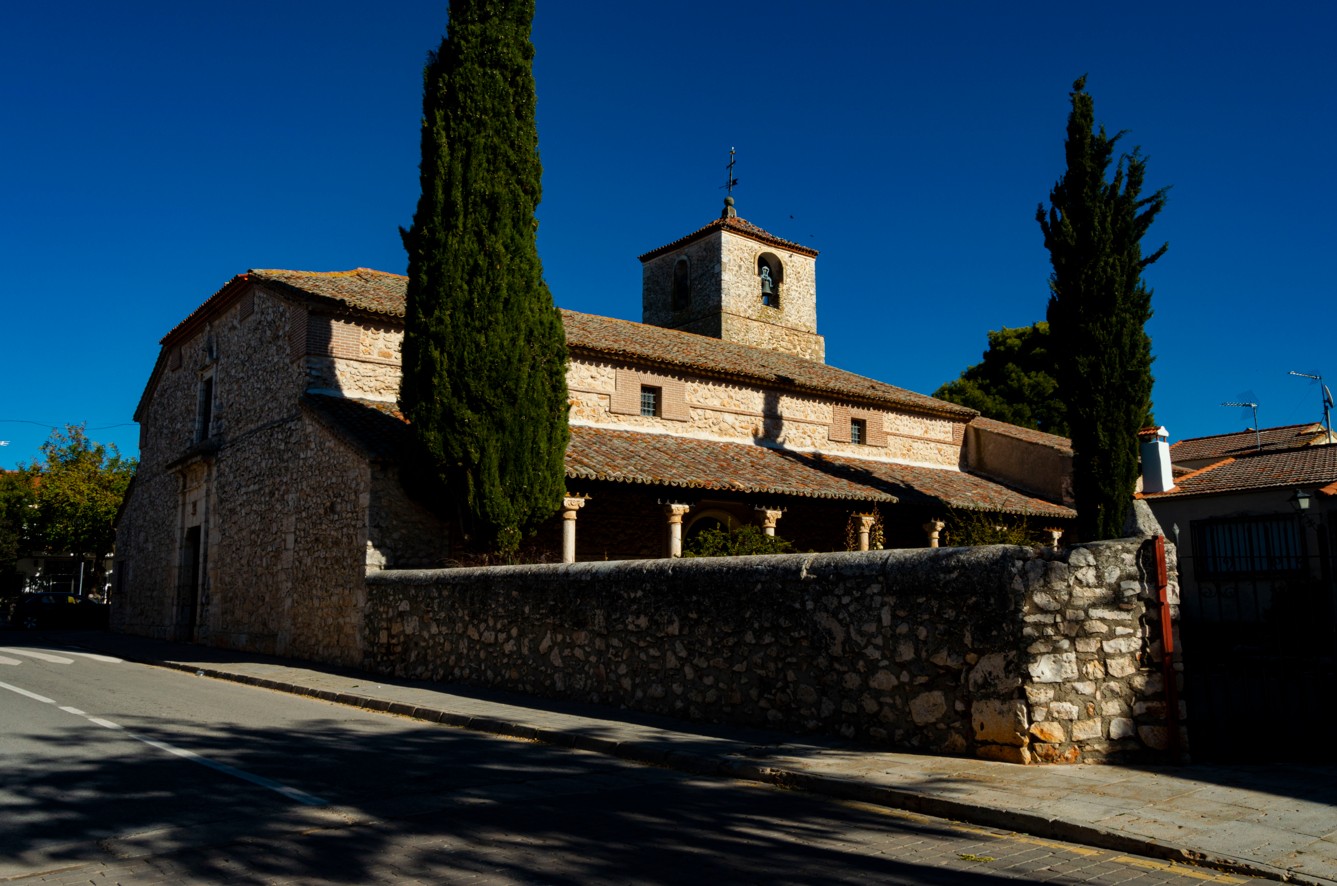
This building is one of the lesser-known medieval monuments, but is perhaps the most intriguing in the Madrid province. Originally built in the 12th century, from this period it still has the Romanesque-style apse windows and anthropomorphic tombs.
It was renovated in the first half of the 16th century by Don Alonso Hernández de Tendilla, steward to Cardinal Cisneros. This renovation included the building of the Gospel nave, the Mudejar pillars in the side naves, the reconstruction of the south portico, the tower and the belfry. The mid-18th century saw the renovation of the entrance to the church on the main facade and the altarpiece in the main chapel. Particularly noteworthy are the 16th-century Talavera tiles in the main chapel, at the front of the side naves and in the sacristy, as well as a wide variety of Baroque altarpieces, with some Rococo elements, all of excellent quality. The whole place was restored in the 20th century.
On this facade we find a porticoed gallery known as ‘El Portalillo’. Built in 1536 to provide shelter from the cold winter winds, it was used for council and guild meetings in the Middle Ages. The gallery provides access the church through the Puerta de la Epístola (Epistle Door) featuring elaborate plateresque ornamentation, the work of Cristóbal de Miranda. This entrance and the main entrance to the church were built at the request of the parish priest Alonso Hernández de Tendilla, steward to Cardinal Cisneros who later retired to Pezuela.
The Portalillo garden contains the entrance to a cistern, an underground ashlar tank built in the 16th century, where rainwater is collected for use by the church.