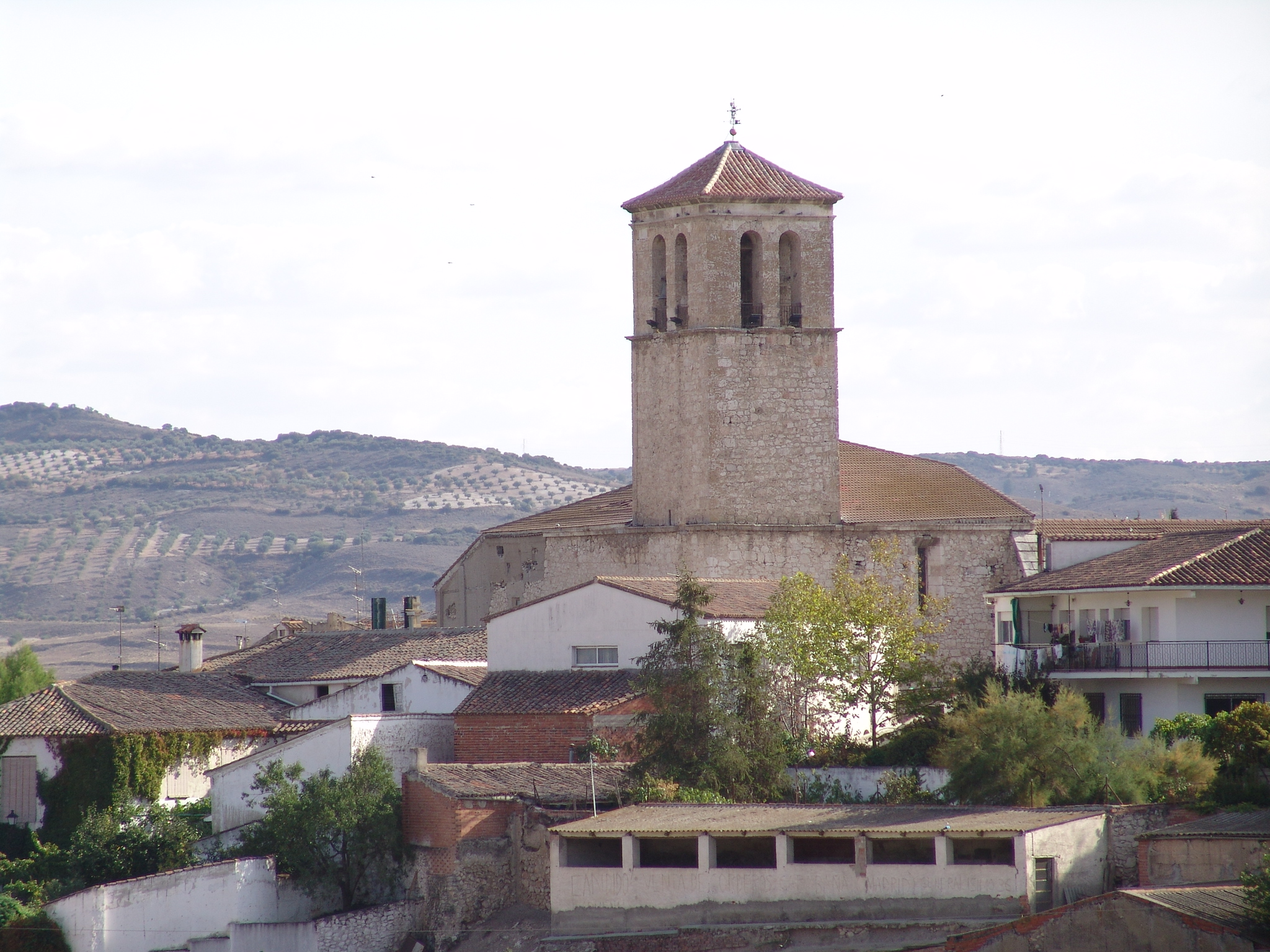
The Church of Our Lady of the Assumption, the construction of which began before the 14th century, was rebuilt in the 16th century under the parish priest Bartolomé Bustamante, who also partially funded the work. The frontispiece in Plaza de Joaquina Orea, known as La Placituela, has a doorway with a semicircular arch and a niche with Our Lady of Antiquity. The eastern wall, opposite the Casa de los Garnica, has a tower on the far left. The main door in the Plaza de Virginia del Pozo has an arch with the inscription ‘PTRANSSIR CAVE NISI DIXERI AVE’ (Do not enter without greeting). Inside, the three naves are separated by ten Ionic columns. The Mudejar-style wooden ceiling contrasts with the Gothic ribs of the first section. Originally, the temple had a Baroque altarpiece by the Martínez de Castañeda brothers, which was destroyed during the Civil War and replaced by a new one with a figure of Our Lady of the Assumption. The Chapel of St. Catherine houses The Christ of Peace and Health, the patron saint of Carabaña. The original sculpture, attributed to Juan Martínez Montañés, was destroyed during the Civil War, and the current one is a reproduction from 1939. In 1730 an altarpiece was commissioned from Antonio Mora, coinciding with the founding of the Cofradía del Dulcísimo Nombre de Jesús (Brotherhood of the Sweet Name of Jesus), now the Hermandad del Santísimo Cristo de la Paz y la Salud (Brotherhood of the Holy Christ of Peace and Health). Its veneration increased during the cholera epidemic in the 19th century. There is also a 6th century Visigoth font, found during reconstruction work in the chapel of Our Lady of Fatima, decorated with geometric motifs.