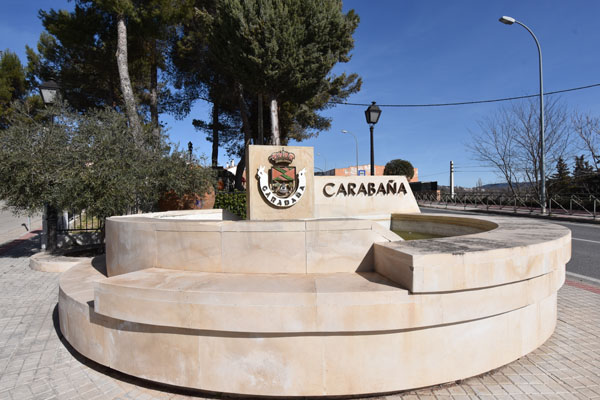
We suggest that you get to know our town by doing this simple, pleasant walk through the streets of whitewashed houses and facades with coats of arms that bear witness to its eminent past. Before there was running water or electricity, and life moved at a slower pace, women would go to the fountains every day to collect water, wash clothes, chat and sing cheerfully. Those were different times, when people built their homes under the protection offered by the caves, where the temperature was always pleasant, and their memory can still be appreciated along this route that we recommend.
1. Neoclassical Fountain 18th Century This fountain is located in the square called Plaza de Virginia del Pozo, who was one of the town’s benefactors, popularly known as La Señora. Belonging to one of the most important families in the municipality, she donated land for schools to be built there.
2. Fuente del Tablado Fountain 19th Century The Fuente del Tablado was built in 1889, as evidenced by an inscription on the stone. Its twin fountain is the Fuente del Altillo. In the past, the parish priest would sprinkle water from the fountain over the houses on Holy Saturday to ‘scare away the demons’.
3. Fuente de San Juan Fountain 20th Century
4. Fuente del Altillo Fountain 19th Century
5. Fuente del Parque de la Morera Fountain 21th Century
6. Casas Cueva The existence of this kind of building dates back to the 19th century.
The lords of the town granted land for labourers to build their houses. Since then, the appearance of the cave houses has changed with the addition of whitewashed outer walls and chimneys. In the 1980s, seventy cave houses were still being lived in. Today, a few remain in the area around the streets of Cuevas Viejas, San Roque and Virgen de Guadalupe.