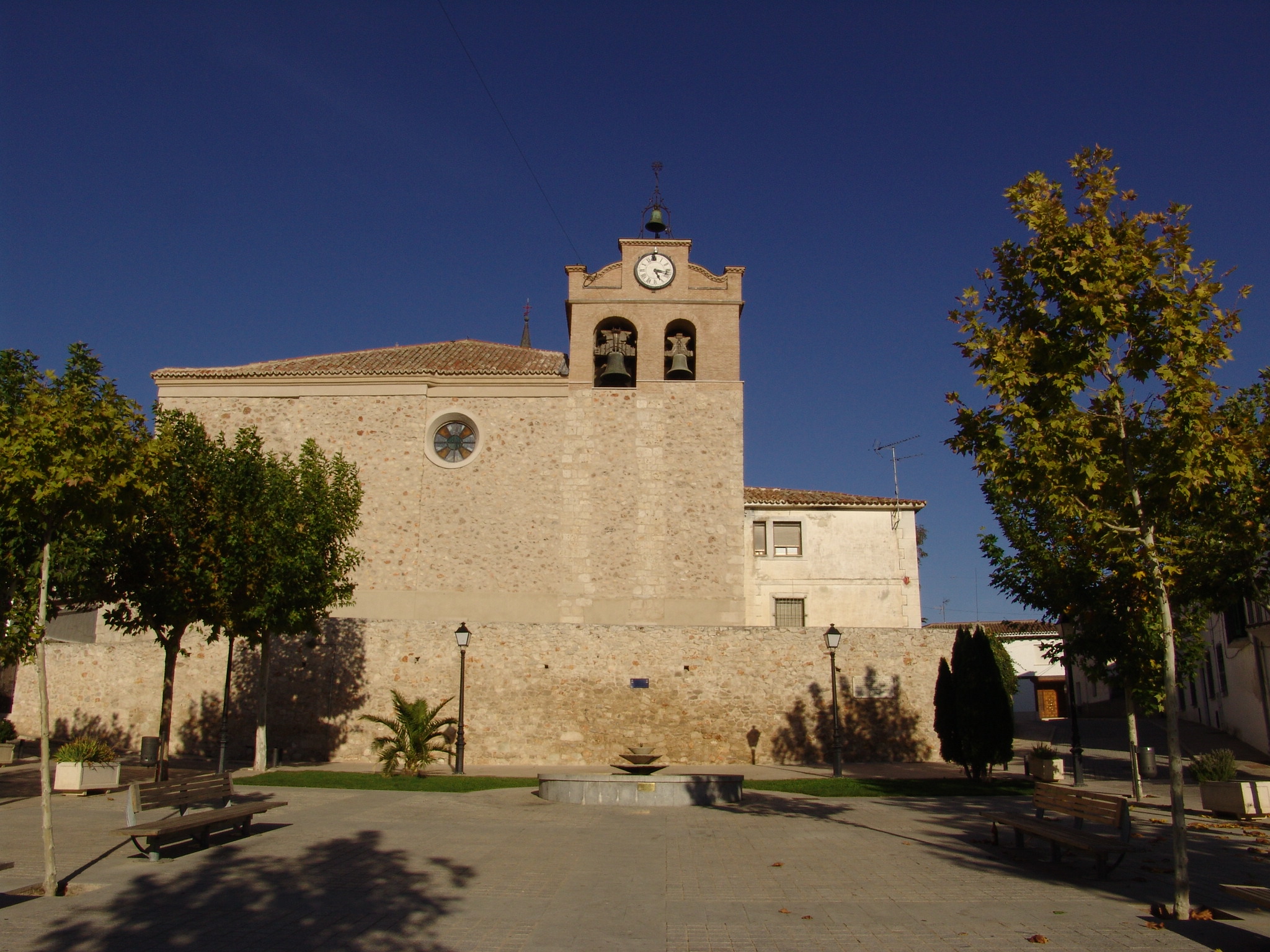
The town’s third church to be built since it was founded in the 12th century. In Renaissance style, it was commissioned in 1568 by the Princes of Eboli, future Dukes of Estremera and Pastrana, and works finished towards the end of 1606.
Over the centuries, it has undergone several changes, above all in the bell tower and facade towards the square, which collapsed in 1868 and needed to be built all over again.
It is a simple, classical building. It has a three-nave floor plan, each nave divided by composite stone pillars and semicircular arches. The dome that covers the transept was built at the end of the 17th century and, following new Baroque trends in Madrid, is encamonada (i.e. it is made of plaster, supported by wooden frames).
Attached to the Epistle side is the Chapel of St. Joseph, founded in the mid-17th century as the funeral chapel of the Megía family, whose heraldic coat of arms can be found on the inner doorway. It houses a beautiful Flemish Plateresque altarpiece, painted on panel and attributed to the school of Juan de Flandes.
Inside, there is a Crucifixion with Romanesque traces and a stone baptismal font. Legend has it that these came from the now disappeared town of Casasola, which means that they date back to before the 14th century. The Baroque main altarpiece and the Altar of the Patron Saints, with the figures of Christ of the Holy Sepulchre and Our Lady of Solitude, are also significant.
The main jewel of the church is found in the choir: the magnificent Baroque organ dating from 1716 built by Pedro Liborna Echevarría, creator of organs of great significance such as the Epistle organ in Segovia Cathedral in 1700 and the one in the University of Salamanca in 1709. It was restored in 1994.