13th century
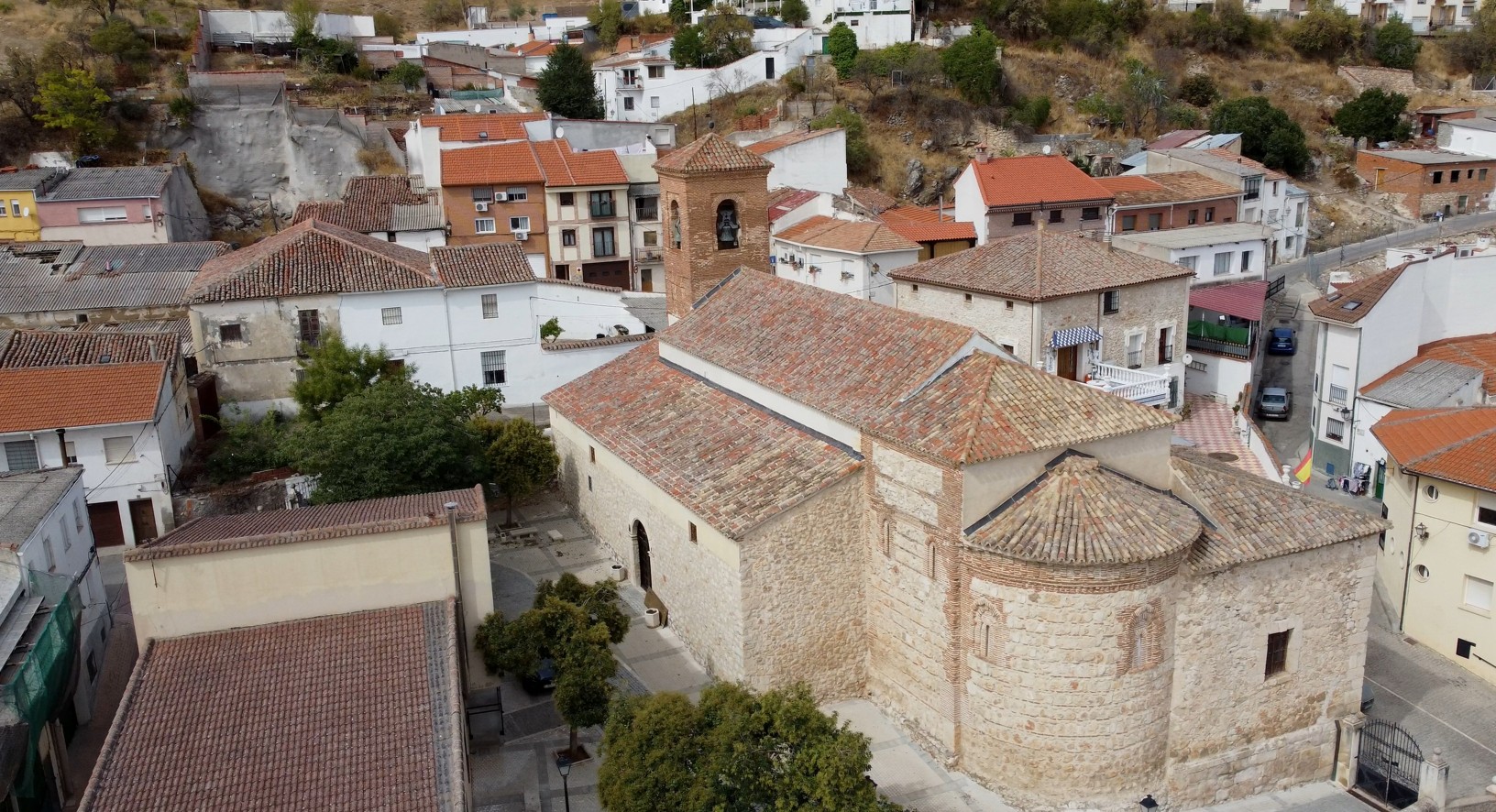
Built in the 13th century, the Church of San Martín Obispo was constructed just a century after King Alfonso VI reconquered the area, possibly between 1240 and 1255. Only the apse remains of its original design, the sole element that was not demolished during the extensive renovations carried out in the late 16th or early 17th century. These renovations resulted in the current three naves, separated by Tuscan columns and joined by semicircular arches. A choir, a sacristy, and a new tower were also added.
Without a doubt, the most important element of the temple is its Mudejar apse, one of the few that are preserved in the Community of Madrid and which makes this church, since 2017, a Cultural Interest Asset in the category of Monument.
“The Mudéjar style of Toledo is undoubtedly the greatest influence on the apse of the church, not only in its decoration but also in its construction, which is a copy of the Arab mosque later converted into the Christian church of Cristo de la Luz, located in Toledo. In this church, the portion of the paintings that were lost in the Valdilechero are preserved, making it possible to know what it looked like in its origins.”
The fresco murals were rediscovered in 1976 by the parish priest Antonio Moreno, who sensed their presence beneath the plaster that covered them when he took down the altarpiece.
In the Pantocrator, Jesus Christ appears seated on the celestial throne, dressed in a white tunic and a reddish mantle, which stand out against a blue background. He is within an oval or "mystical mandorla," in which the colors black, yellow, and red predominate, ready to dispense justice on Judgment Day.
The Tetramorph (animal symbols of the Four Evangelists) surrounds him, although only the lion of Saint Mark and the ox of Saint Luke are clearly distinguishable, while only a few wings remain of the allegorical figures of Saint John and Saint Matthew. They are accompanied by archangels (perhaps Gabriel and Michael), as can be guessed from the scant traces that remain.
Below the Pantocrator, inside the blind arches, one can see poorly preserved painted remains of various apostles, identified by inscriptions bearing their names. These include “Andreas,” “Petrus,” “Matheus,” and “Simon.”
A 17th Century Christ
Among the images currently housed in the church, the Crucified Christ that presides over the main altar stands out for its antiquity, a marvelous 17th-century carving.