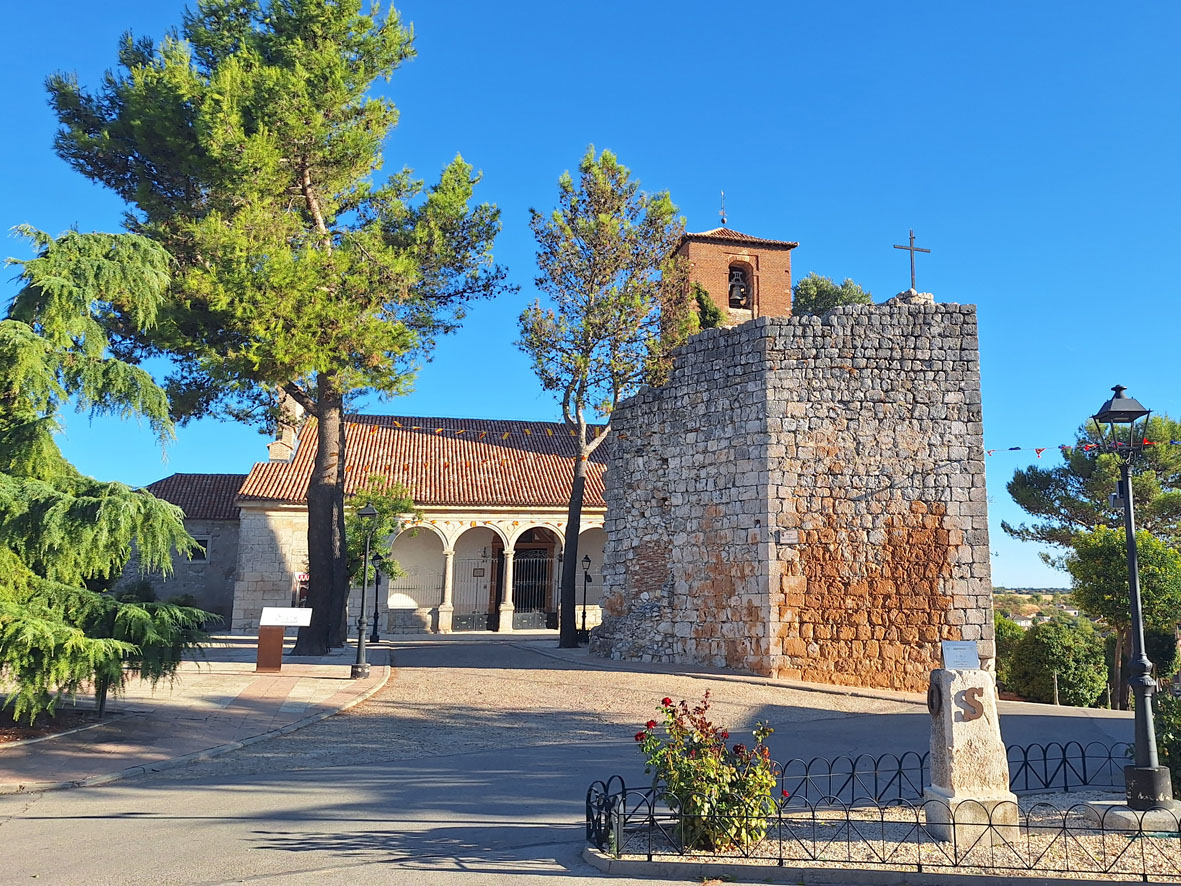
1. Church of St. Torquatus and Torremocha Castlea Built over an area of 8,000 m² on the highest hill in the town, the enclosure dates from the 13th century and was possibly an extension of a Muslim fortress carried out by the Christians. Used by the archbishops of Toledo, it was a state jail and prison until it was destroyed in the 19th century. It still has its original outline, although the walls have been restored several times. The Mudejar Parish Church of St. Torquatus in Santorcaz is attached to the castle. It is a 13th century building in Romanesque style, but its humble construction is based on stonework with brick courses. This church has a triple apse chancel, which has been well restored.
2. ‘Llano de la Horca’ Carpetani Archaeological Site Located on an 8-hectare plateau near the town, this is a Carpetani settlement dating from between 250 and 70 BC. Its urban structures are exceptionally well preserved, with no later changes made, and show the original urban layout surrounded by the agricultural crops of pre-Roman Carpetania.
3. Hermitage of Our Lady of Orcález Located at the foot of Atalaya hill, this 14th century hermitage was built by an archdeacon of Toledo, possibly over earlier ruins. It has a rectangular floor plan with a Gothic apse and other Gothic elements, and is in the process of being rebuilt after a fire that happened in 2004.
4. Islamic Watchtower Remains of a Caliphate tower from the 9th or 10th century, located on the Cuesta de la Torrecilla hill. With a rectangular floor plan (3x6 m) and 1.5 m walls, it is still three metres high. A large amount of Arab pottery has been found on its slopes. It is legally protected by historical heritage legislation.
5. Hermitage of Our Lady of Solitude Built in 1671, possibly over an old humilladero (shrine) that already existed in 1575, when the 16th-century Brotherhood of Our Lady of Solitude was founded. The building has a square floor plan, a single door at the front and two arches on a central column on one side, with the opening closed off by structures similar to the wall.
6. Hermitage of Our Lady of the Conception There is evidence of its existence at the end of the 19th century, although it was restored in 1986. On its main facade, there is a plaque from the Brotherhood of the Holy Christ of Faith in honour of the Paratroopers Brigade (BRIPAC). It lists the names of those who fell during a paratrooper operation in the Santorcaz drop zone.
7. Fuente del Caño Alto Fountain Next to the M-213 road, this is a natural spring from the Llano de la Horca hill. It serves as a watering trough and has a limestone front attached to the ground. A spout supplies a rectangular, partially compartmentalised basin, which still serves its traditional purpose.
8. 19th Century Washing Place They were built at the end of the 19th century and have recently been restored.
Natural Heritage
Santorcaz is located in a limestone area of the Madrid Region that boasts natural heritage in an excellent state of conservation. There are plenty of hills, springs, paths, farmland, etc. In this area, tourists will find themselves in an extraordinary natural environment with highly irregular and unusual terrain.
Our natural heritage also includes a range of paths that have meandered through our town since the Middle Ages. Many of them lead to neighbouring municipalities, while others connect the different areas of the town. You can follow these paths to enjoy a pleasant walk, appreciating the landscape and close contact with nature.