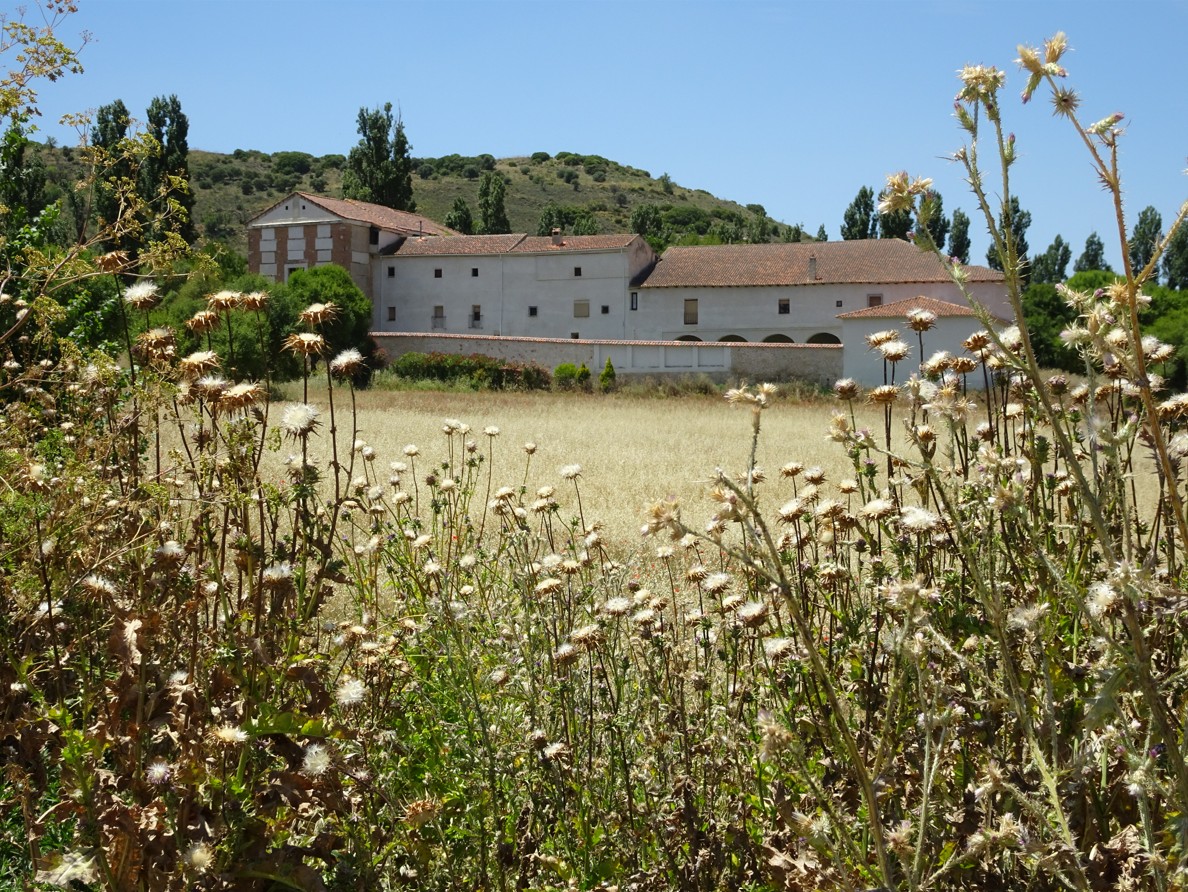
Old Convent of St.Thomas (16th Century)
This old Dominican convent, on the old road to Pozuelo del Rey, was an agricultural complex that originated in the 16th century, consisting of a hermitage and farmhouse.
It was originally managed under the Dominican College of St. Thomas Aquinas, founded in 1529 by Don Carlos de Mendoza in Alcalá de Henares. When the College was founded, the Monastery of Our Lady of the Angels in Valverde de Alcalá was added to support the students.
The location of the complex, quite remote from the town centre, led to the convent also serving as a refuge for religious people, as was the case in 1808 during the War of Independence.
In 1836, the convent underwent the Mendizábal confiscation, and in 1838, the Los Ángeles Estate was acquired by Domingo Saracho, who paid 930,000 Spanish reals for it, and was later sold for 970,000 reals to the ancestors of the current owners.
During the Civil War, the old convent was used as barracks by a Republican tank division. After the conflict was over, it was once again used as a recreational farm.
In terms of religious and agricultural architecture in the Complutense region, it is truly an exceptional complex. Its uniqueness comes from the estate’s double function as both a Marian centre and an agricultural farm.
Some standout elements on the estate are the oil mill, the granary or storehouse, the dovecote, the convent buildings and the church with its Chapel of the Virgin Mary, the latter two decorated with Baroque mural paintings.
Today, it is a private estate, but it is worth a taking a walk to see the complex, surrounded by a landscape of olive trees and grain