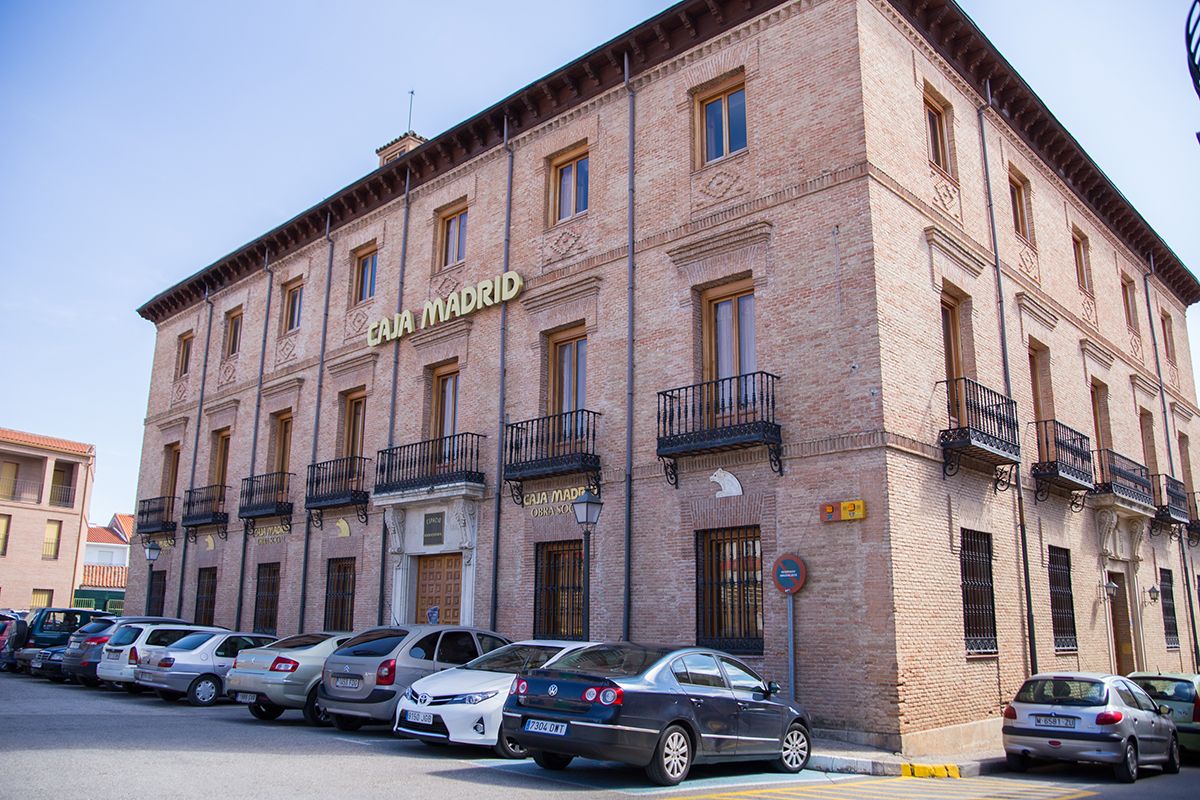
The house was built between 1881 and 1882 on a site with a farmhouse belonging to the Convent of St. Francis in Ocaña, which was acquired by the family of Doña Ramona Muñoz de Acebal y Arratia, wife of Don Diego Jarava, during the Mendizábal confiscations.
It is the work of architect José Urioste y Velada, who also built the Huerta de Angulo Mill in Morata, belonging to this family.
In April 1899, Don Diego María Jarava de la Torre bought a farmhouse, measuring 146m², that formed part of house number 39 in Calle de la Iglesia, which he added to his estate. In 1955, some blocks with 24 dwellings were built on the same site under a project by architect Carlos de Miguel.
The house was only lived in by the family seasonally, until the death of the Mac-Crohon Jarava couple in 1919. During the Civil War, it functioned as a blood hospital. At the end of the war, the Municipal Schools were set up here in 1946.
Since 1983, it has been the town’s Cultural House, having been acquired by Caja Madrid to carry out its social work. The Mac-Crohon House remains the most important civil building in Morata de Tajuña, and one of the most beautiful in the district.