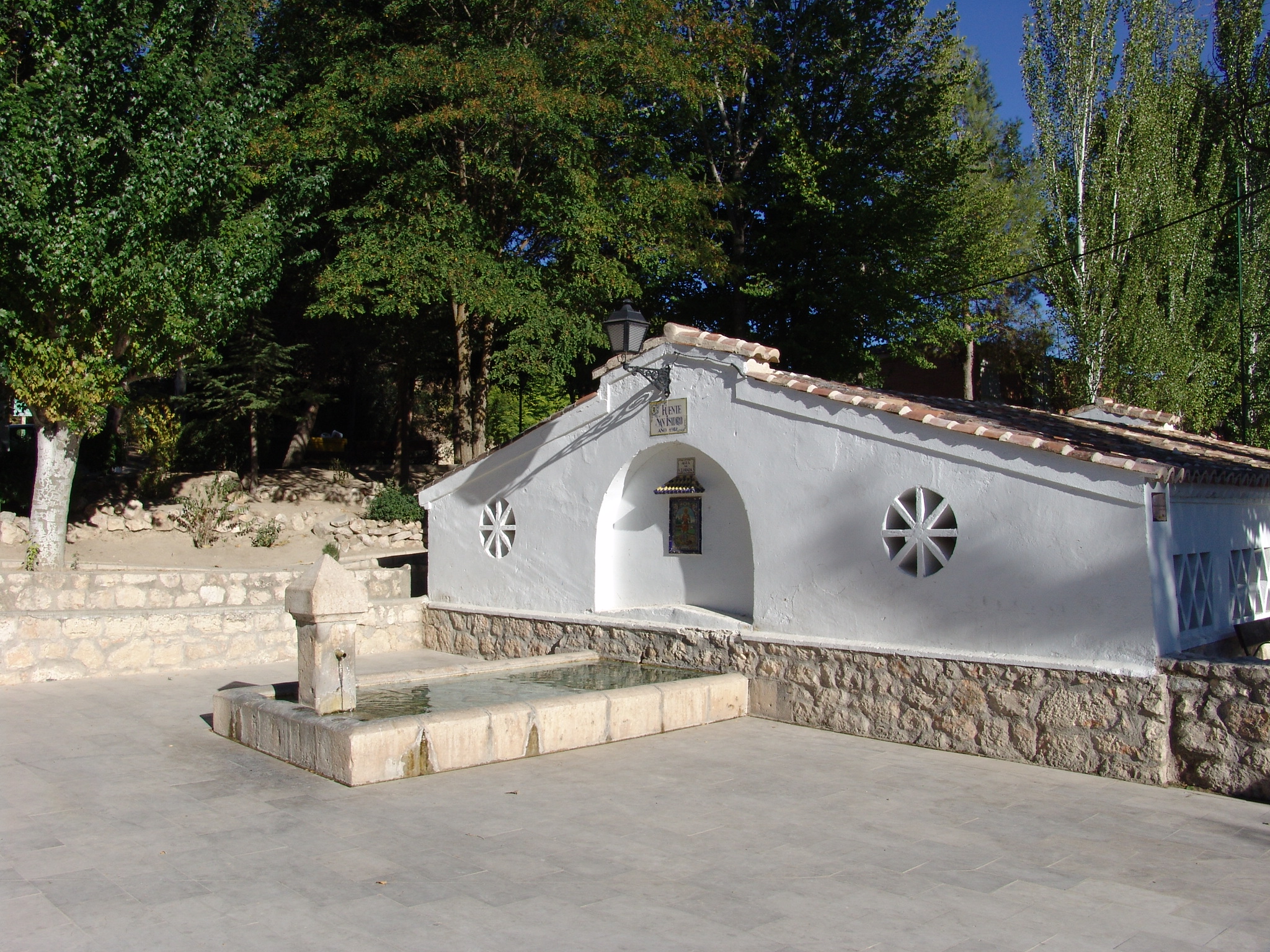
Villar del Olmo, historically an important place for livestock travelling across Castilian lands, is famous for the abundance of springs in its municipal territory. As early as 1579, the second survey of Philip II’s Relaciones Topográficas described the town as ‘abundant in water from streams and springs’.
However, it was not until 1893 when the authorities of Madrid province decided to build a fountain for the La Vega stream to improve hygiene conditions, as the large puddles prevented horses from passing. Nine years later, in 1902, a whole structure was built including a fountain, drinking trough and wash basin, which became the only water supply point for the townspeople until the town received running water.
This structure, which cost two thousand five hundred and thirty pesetas and four cents, was dedicated to St. Isidore, patron saint of Villar del Olmo at that time. In the 1940s, a brick enclosure was built around the washing place to protect it with a roof, a structure that still remains today.
In the 1990s, the Directorate-General for Architecture in the Madrid Region renovated the entire structure. In 2006, thanks to aid from the European Agricultural Guidance and Guarantee Fund, the surroundings were adapted.
Today, St. Isidore’s Fountain & Water Trough is not just a reminder of Villar del Olmo’s history and rural life, but continues to be a meeting place for the community and an example of its cultural heritage.