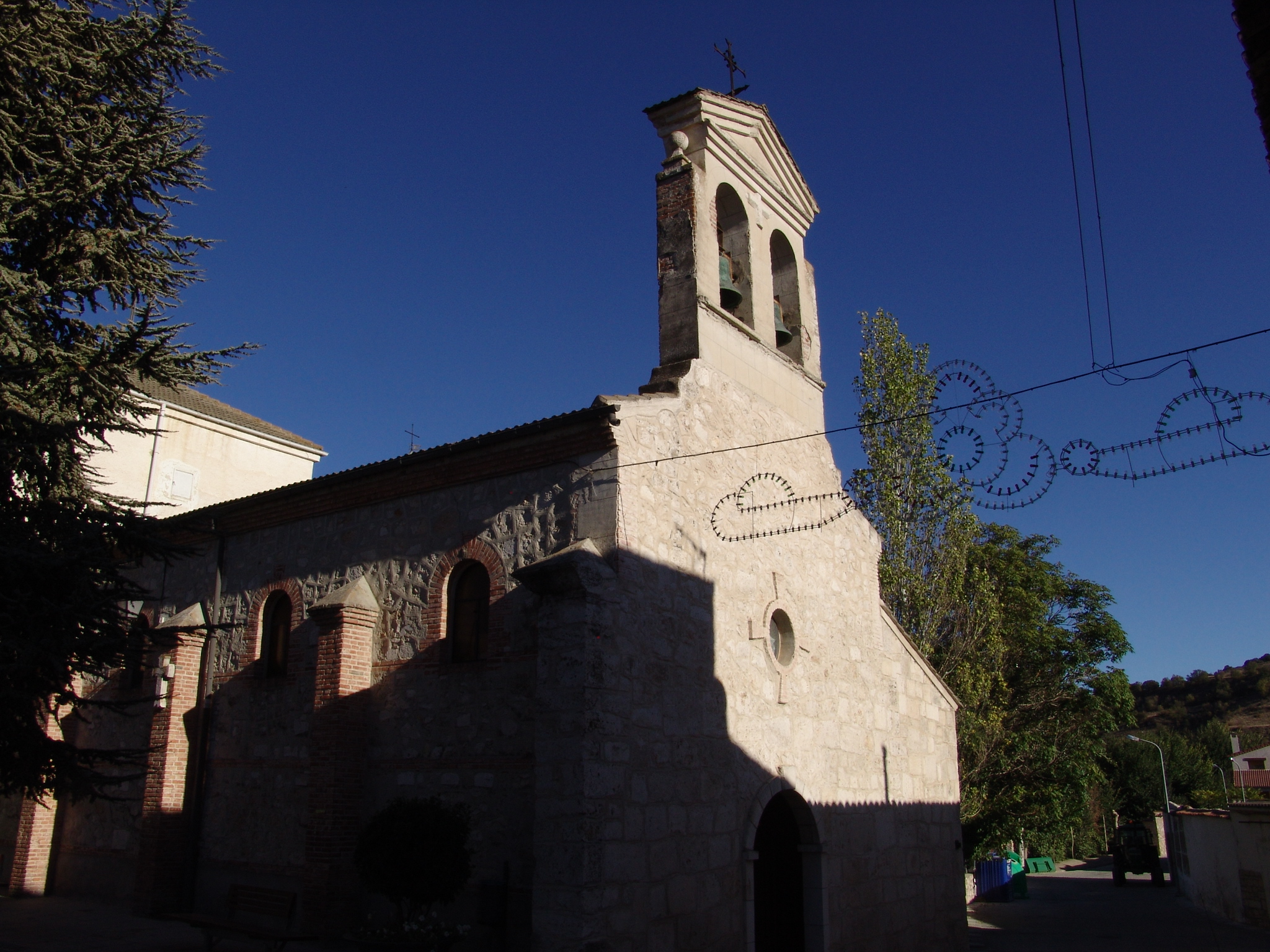
This building is one of the best examples of rural Romanesque architecture in the Madrid Region and is linked to the town’s origins. Its title reflects the former Christian presence in the Tajuña valley between the 11th and 12th centuries, when this region was a borderland between the Moors and the Christians.
In the late 16th century, a significant renovation of the church took place, giving it its current Latin cross floor plan. Two side naves were added to the main nave, divided by eight smooth-shafted columns, and the transept was covered by a dome on pendentives that is still there.
The main altarpiece, built at the end of the 17th century, is Baroque and features four fluted Corinthian columns that divide the structure into three blocks. The central block is the most important, with an image of Our Lady of Antiquity and a small Christ on a cross made of Valsain pine wood.
The adjoining chapel, dedicated to the Immaculate Conception, was built in 1908 by order of the Archdeacon of the Metropolitan Church of Burgos. The style is neo-Mudejar, combining limestone stonework with rows of brick. Its circular interior, with cylindrical pilasters and a hemispherical dome with stained glass windows, make it an architectural wonder.
Much of the religious imagery was lost in the Civil War, including the Baroque altarpiece of the Immaculate Conception and other valuable pieces. Renovations in 1950 and the 1970s significantly changed the church with the removal of chapels, altarpieces and the 17th-century iron pulpit, as well as other elements.