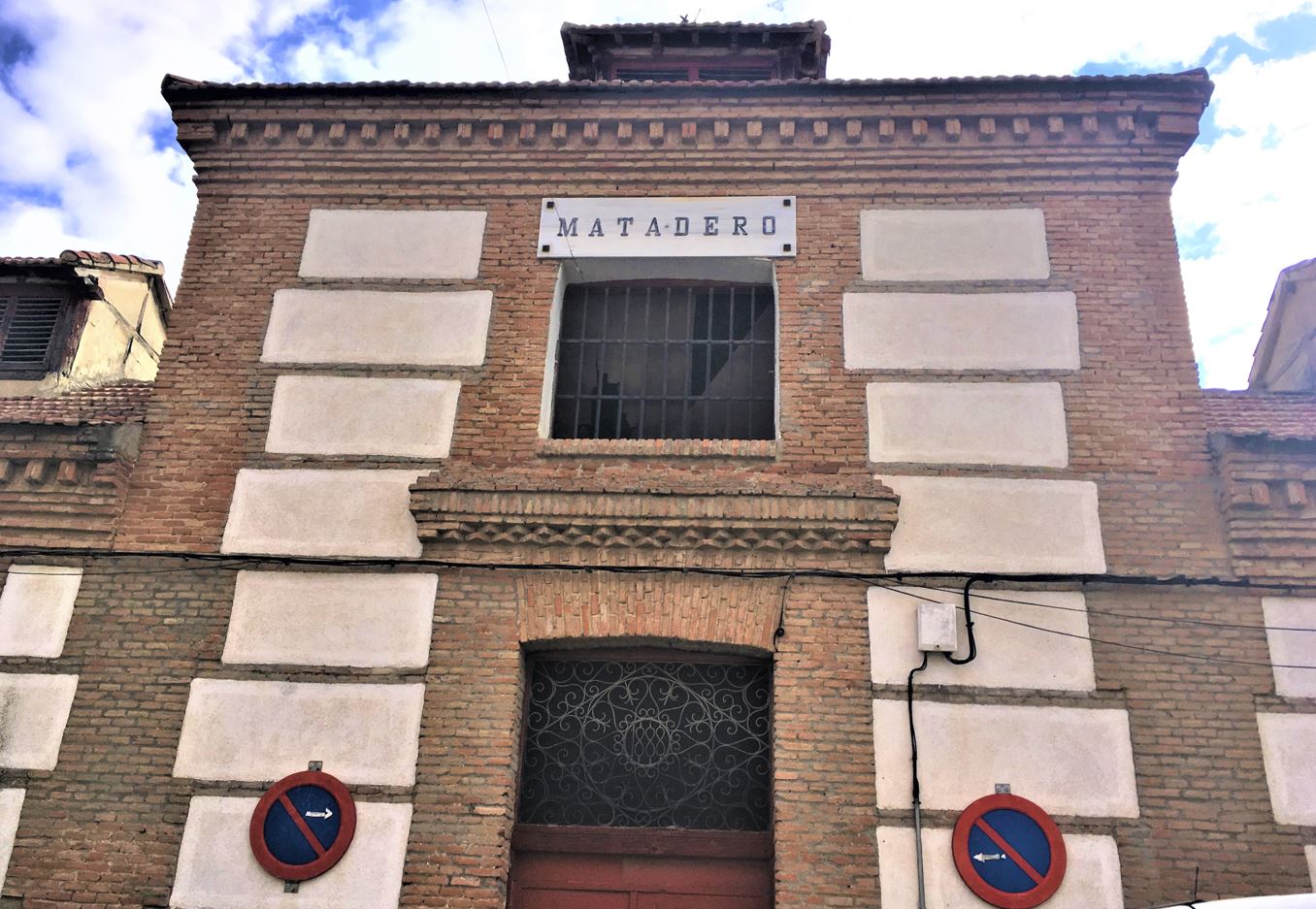
This imposing building, with solid lines and unique dimensions, was built in 1888 as a prime example of 19th-century industrial architecture. Its structure consists of three rectangular sections that form a T-shape around the central square-shaped vestibule. On the facade, the majestic main door is truly eye-catching, crowned by a window which, together with the skylight, bathes the double-height space in natural light.
The building’s naves, with a floor covered with slabs of Colmenar limestone, were designed for a range of slaughtering tasks according to the type of livestock. The facade shows impressive architectural work, with walls that combine masonry and brickwork, forming decorative chains in the corners and the frames of the apertures. The dominance of the brickwork can also be seen in the crafted cornices, the recessed arches of the apertures and the impost with corners in the central section.
The roof, built using flat ceramic tiles (originally curved), rests directly on the purlins of the structure. There are four ventilating skylights on the roof ridge, the most elaborate of which lights up the vestibule. This skylight not only ensures airflow, but also fills the entire space with natural light, topped by a hipped roof and an elegant wrought iron weather vane.
The building’s exquisite ironwork is also a highlight, especially the grille that adorns the entrance door; an element that is both artistic and functional.