1931 - DECLARED NATIONAL HERITAGE
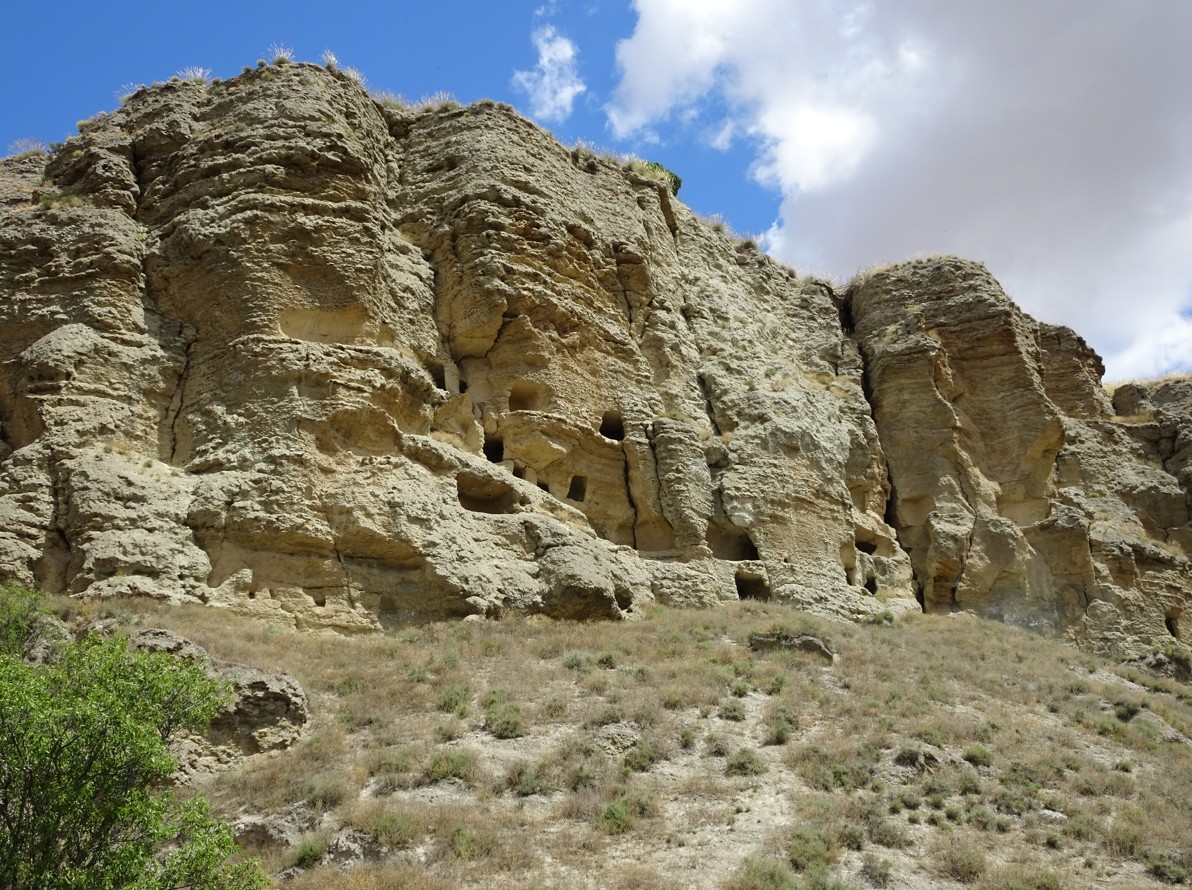
On the road from Perales to Tielmes, just after the bridge on the N-3 road, there is a limestone wall where some famous prehistoric hollows are found. There are 47 open cavities in the mountain, some of which are significantly large, with some forming units of eight directly above or below.
We do not have much technical information before the date of the caves, although there are references to archaeological materials from the Neolithic period, to which the first lithic tools found in the area belong. Close to the cliff, significant collections of technical material (arrowheads, drills and flint knives) and a large amount of ceramic remains from the Bronze Age have also been found.
According to some researchers, these caves were home to the Caracitans, a Carpetani tribe. In the 1st century BC, the Roman general Sertorius subdued the tribe after ordering his troops to kick up a heap of dust, which was blown into the caves by strong winds and suffocated those living inside. An interesting detail that proves fighting took place nearby is the appearance of slingshot projectiles made of lead, which would confirm the credibility of ancient accounts.
In medieval times, during the Muslim rule, the caves remained inhabited, as evidenced by fragments of utensils and pottery that were collected by scholars and experts during the earliest research carried out on the cliff in the 19th century.
The ongoing settlement at the cliff continued well into the 20th century, and today it is still possible to hear accounts from people who lived there. As such, the caves served as a home, refuge, storehouse and gra nary for a population that saw cave dwellings as an ideal solution in a geologically advantageous setting.
In 1931, the Perales de Tajuña cliff and its caves carved into the rock were declared National Heritage.