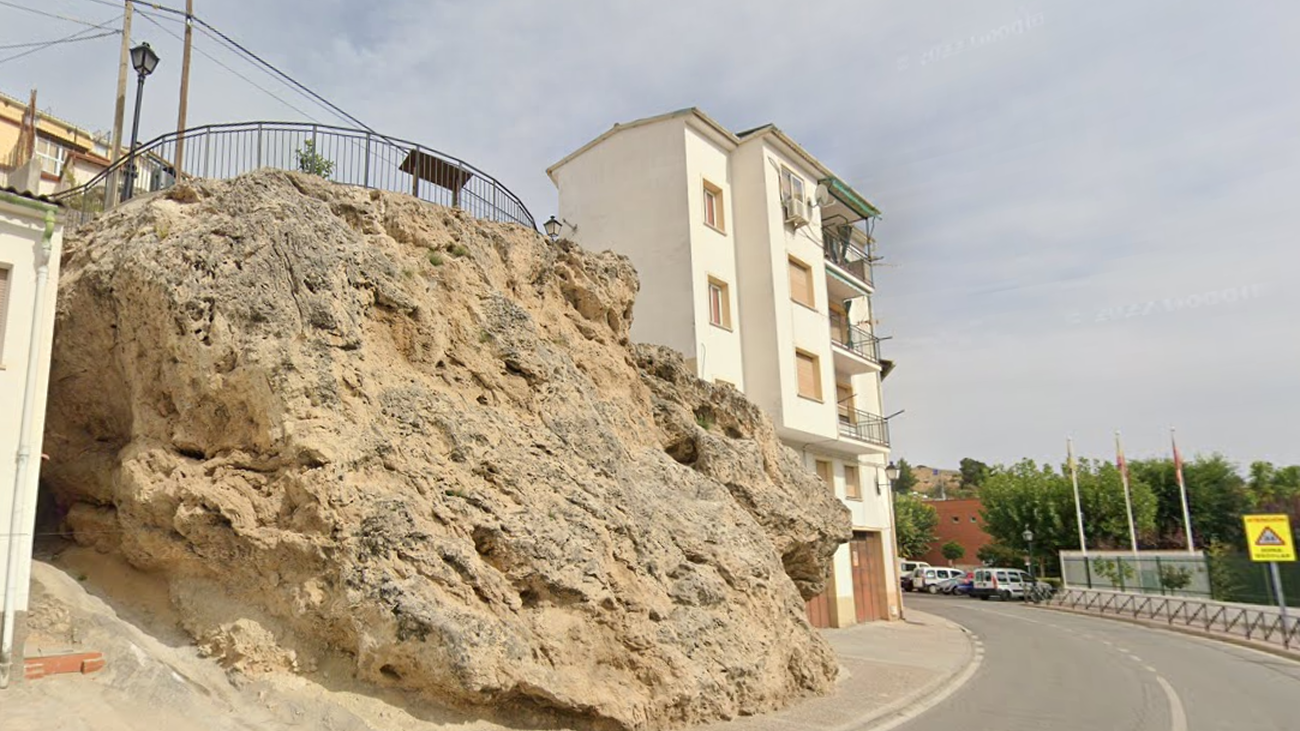
A significant rock formation from the Quaternary period, called ‘Tears of St. Peter’. Made of tuffaceous limestone formed by underground water currents, these rocks contain various cavities and tubes in different shapes, sizes and directions, formed through erosion. This process has exposed urban tuffs which, together with structures such as cellars and staircases, characterise the Castillo neighbourhood where this peculiar formation is located.
Local tradition has speculated on the myth of the Tears of Saint Peter, recognising his guilt and imploring forgiveness for having denied Christ three times, through the image of these unusual and strange rocky outcrops. Coincidentally, there is a total of three of them, unexpectedly emerging from the ground in the oldest neighbourhood in Perales de Tajuña.