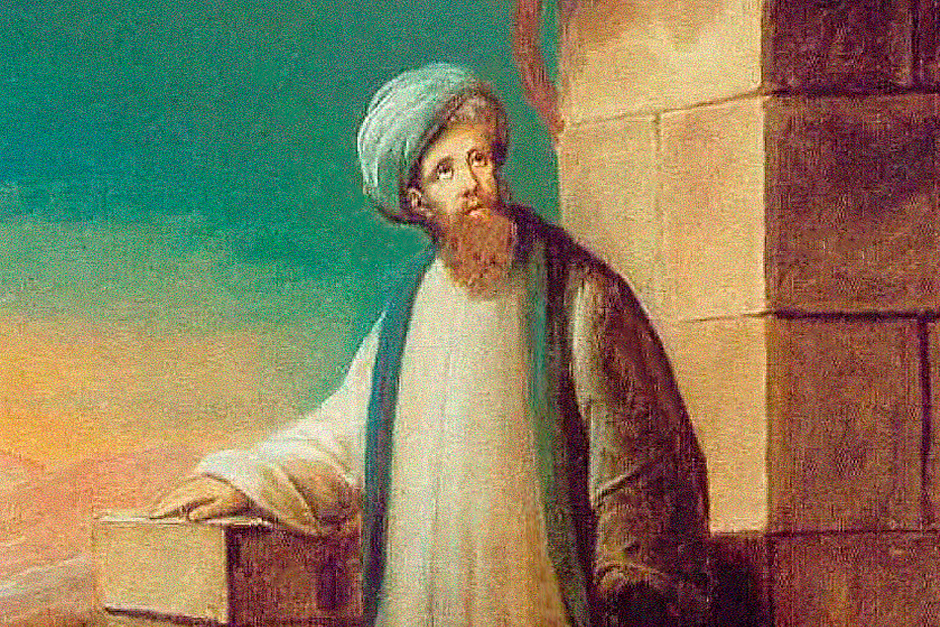
A Nobleman from Olmeda
He was born to a noble family in 1564 in Olmeda de las Cebollas (Onions), now Olmeda de las Fuentes (Fountains), in Madrid province. In 1582, he left Olmeda to study at the University of Coimbra (Portugal), and at 18 years old he joined the Society of Jesus. After finishing his theological studies, he expressed his calling to be a missionary to his superiors.
Great adventure
In 1588, he began his long voyage to the Orient and Africa, and never returned. He first went to India, to Goa, where he stayed for about a year. From there, he travelled with Father Antonio de Monserrat, heading for the Gulf of Hormuz, on their way to the destination set by their superiors: Ethiopia.
On this first journey, their wishes were not fulfilled, and they were captured by the Arabs, who sold them as slaves to the Turks. Due to their captivity, they were the first two Europeans to cross the Hadhramaut region in southern Yemen. Later, on the same journey, they crossed the Rub-al Khali desert, the largest expanse of sand in the Arabian Peninsula.
After six years in captivity, they were rescued and taken seriously ill to Goa, where Monserrat died and Paez miraculously recovered after eight months of care.
Friend of the Ethiopians
Despite his experience, he asked to be sent to Ethiopia again. In 1603, disguised as an Armenian, he managed to cross the Red Sea and enter Ethiopia. During his African trip, he devoted his efforts not only to pastoral work, but also to the study of Ethiopia, its language, religion and customs.
He befriended the emperor Susinios, whom he accompanied on several of his journeys, on one of which he was able to see the sources of the Little Nile and the outlet of the Blue Nile at Lake Tana. In doing so, he became the first European to achieve this feat.
History of Ethiopia
A polyglot, man of action, intellectual and architect, he built a two-storey stone palace on the shores of Lake Tana and wrote an impressive book in Portuguese, never translated into Spanish, about Ethiopia, which was of great value for science at the time and still is today.