Underground Hydraulic Heritage
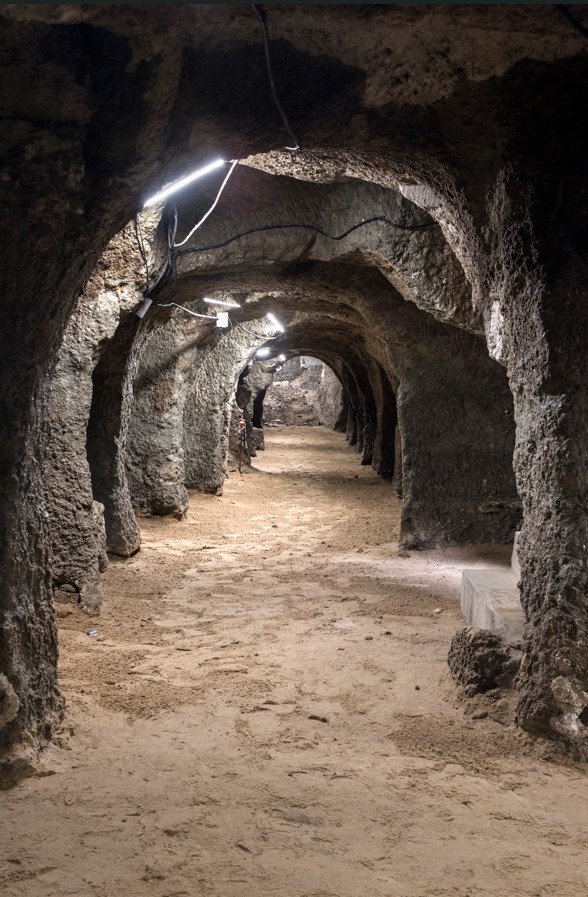
Beneath the soil in Ciempozuelos lies a rich history. From the 14th century onwards, ‘water mines’ began to be dug, underground tunnels that ensured the townspeople’s water supply and the irrigation of crops. These mines, dug by hand in gypsum soils, form a network of passages that supplied public fountains, water troughs and cisterns. The name Ciempozuelos comes from the numerous water wells built next to the mines. Caves and cellars were also built to preserve wine and food, many of which are still used today. In 2020, during repairs in Calle del Padre Benito Menni, an underground cellar connected to two mines of great historical and cultural value was discovered. The Town Council has worked to make it open to visitors, and since 2021, locals and tourists have been able to explore this underground hydraulic heritage.
Another significant discovery was made in 2022 during the restoration of the old Town Hall. A small underground cellar was discovered in perfect condition, which can now be seen through a glass floor in the final building design. These discoveries underline the historical and cultural importance of Ciempozuelos’ underground, revealing an intricate network of tunnels, wells and cellars that have played a crucial role in the lives of its inhabitants over the centuries. The efforts of the Town Council to preserve and enhance the value of these findings allows residents and visitors alike to appreciate and learn about the rich underground heritage of Ciempozuelos, highlighting the resourcefulness and adaptability of its former inhabitants in the use of the natural resources available.